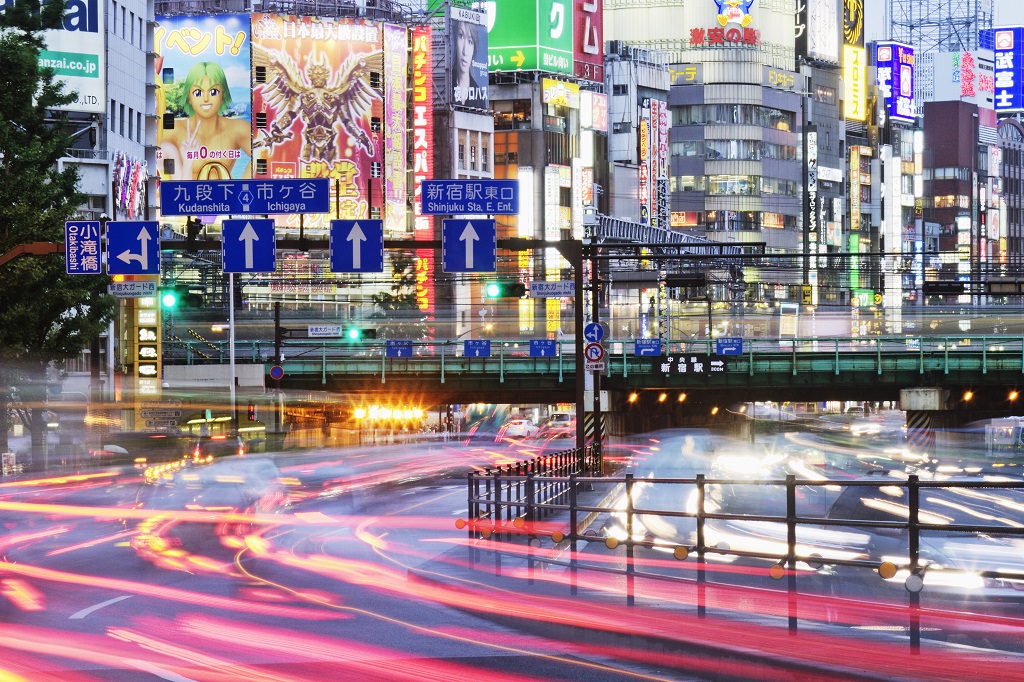
Driving in Japan is an experience that goes far beyond knowing how to drive a car. Japanese traffic is strongly influenced by cultural values such as respect for others, predictability and risk prevention. Therefore, for those coming from Brazil, understanding these rules is essential not only for passing the exams, but for driving safely on a daily basis.
More than just memorizing rules, Japan expects drivers to show awareness, attention to detail and responsible behavior. Below, we've put together the main golden rules for those who want to drive in Japan safely and with peace of mind.
1. Always check visually
In Japan, it's not enough to believe that the lane is clear. It is essential to clearly demonstrate that the check has been carried out by looking to the side and confirming that the maneuver is safe. This attitude shows attention, responsibility and respect for other road users.
2. Mandatory stop is a full stop
In places marked with a mandatory stop, slowing down is not enough. The vehicle must come to a complete stop, even if there appears to be no traffic. This is one of the most frequently observed points, both in exams and in everyday driving.
3. Pedestrians always have priority
Pedestrians are at the top of the hierarchy in Japanese traffic. Regardless of the situation, drivers must stop and wait whenever there are pedestrians crossing or clearly intending to cross the road.
4. Be predictable
Predictability is one of the pillars of traffic in Japan. Signal in advance, maintain a stable trajectory and avoid sudden movements. A predictable driver conveys safety and contributes to the smooth flow of traffic.
5. Prioritize defensive driving
In Japan, prevention is more important than reaction. Careful driving, with constant attention to your surroundings, is valued and considered a sign of maturity and responsibility in traffic.
6. Strictly adhere to the speed limit
Even small overtakes are taken seriously. Respecting the indicated speed shows a commitment to safety and to the established rules.
7. Full attention to signage
Road signs, pavement markings and traffic lights are very important in Japan. Many directions are given directly on the road surface, and ignoring them can result in serious failures, especially during exams.
8. Less haste, more awareness
Calmness and self-control are valued characteristics in Japanese drivers. Showing patience in traffic conveys safety and respect for others.
9. Never assume someone else's mistake
Always drive considering that other drivers, cyclists or pedestrians may make mistakes. Anticipating risks and being prepared to act with caution is part of responsible driving in Japan.
10. Learn the Japanese driving pattern
More than memorizing rules, it is essential to understand the behavior expected in Japanese traffic. There is a driving standard that values collective safety, constant attention and mutual respect.
Conclusion
With the right preparation, driving in Japan becomes a safe, conscientious and smooth experience. Understanding and applying these rules not only increases your chances of passing your exams, but also contributes to safer traffic for everyone.
The Uniserv driving school offers specialized guidance and support in Portuguese, helping its students to understand the Japanese standard of driving and to adapt confidently to this new reality.